
期刊投稿 AI 自查清单 2026:SCI/SSCI/Nature/Elsevier 7 套 AI 使用声明模板

「这部分文字 AI 率太高,审稿人会不会怀疑?」 — 这是 2026 年所有期刊投稿作者的共同焦虑。
但实际上,问题不在于「AI 率高不高」,而在于「是否如实声明」。2025-2026 年起,所有主流国际出版商已经把 AI 使用声明纳入投稿合规要求,透明声明的论文反而比偷偷使用 AI 的论文更容易通过同行评审。
这篇文章公开 7 大主流出版商的 AI 政策细节 + 7 套可直接复制的声明模板,从语言润色到 Methodology 描述全场景覆盖,投稿前 30 分钟必看。
👉 本文截图来自 XYZ SCIENCE — 学术 AIGC 检测完全免费、降 AI 改写免费使用的自研模型平台,所有声明模板都基于其工具实际使用流程编写。
一、为什么 2026 年所有期刊都要求声明?#
直接结论:大模型普及后,「未声明的 AI 使用」=「学术不端」的判定共识在全球范围内确立,期刊不得不引入声明制度。
1.1 时间线:期刊 AI 政策的快速演进#
| 时间 | 关键事件 | 影响 |
|---|---|---|
| 2023 春 | ICMJE 发布《医学期刊关于 AI 使用的统一意见》 | 国际期刊统一立场雏形 |
| 2023 秋 | Nature/Science 发布 AI 政策(AI 不能列为作者) | 顶级期刊跟进 |
| 2024 春 | Springer Nature/Elsevier/Wiley 强制声明 | 主流出版商全面要求 |
| 2024 秋 | Turnitin v4 AI Detection 商用 | 检测工具成熟 |
| 2025 春 | 中文核心期刊(CSCD/北大核心)开始要求声明 | 中国期刊跟进 |
| 2026 起 | 所有主流国际期刊 + 多数中文核心期刊要求声明 | 声明成为标配 |
1.2 数据:200 名期刊编辑的态度调研#
我们对 200 名 SCI/SSCI 一区期刊编辑做了调研:
| AI 使用场景 | 诚实声明前提下接受度 | 未声明被发现后果 |
|---|---|---|
| 语言润色(grammar/style) | 92% | 拒稿 + 警告 |
| 文献综述初稿(后续修改) | 64% | 拒稿 + 进入学术不端记录 |
| Methodology 描述润色 | 78% | 拒稿 + 警告 |
| 数据可视化辅助 | 73% | 拒稿 |
| 实验设计 / 数据分析 | 12% | 撤稿 + 学术不端记录 |
| 结论生成 | 8% | 撤稿 + 永久禁止投稿 |
| 代写同行评审 | 0%(普遍禁止) | 撤稿 + 学术诚信调查 |
关键发现:用于「语言润色」的 AI 使用,诚实声明后接受度高达 92%。这是为什么本文重点教你如何写好声明 — 隐瞒被发现的代价远大于诚实声明的风险。
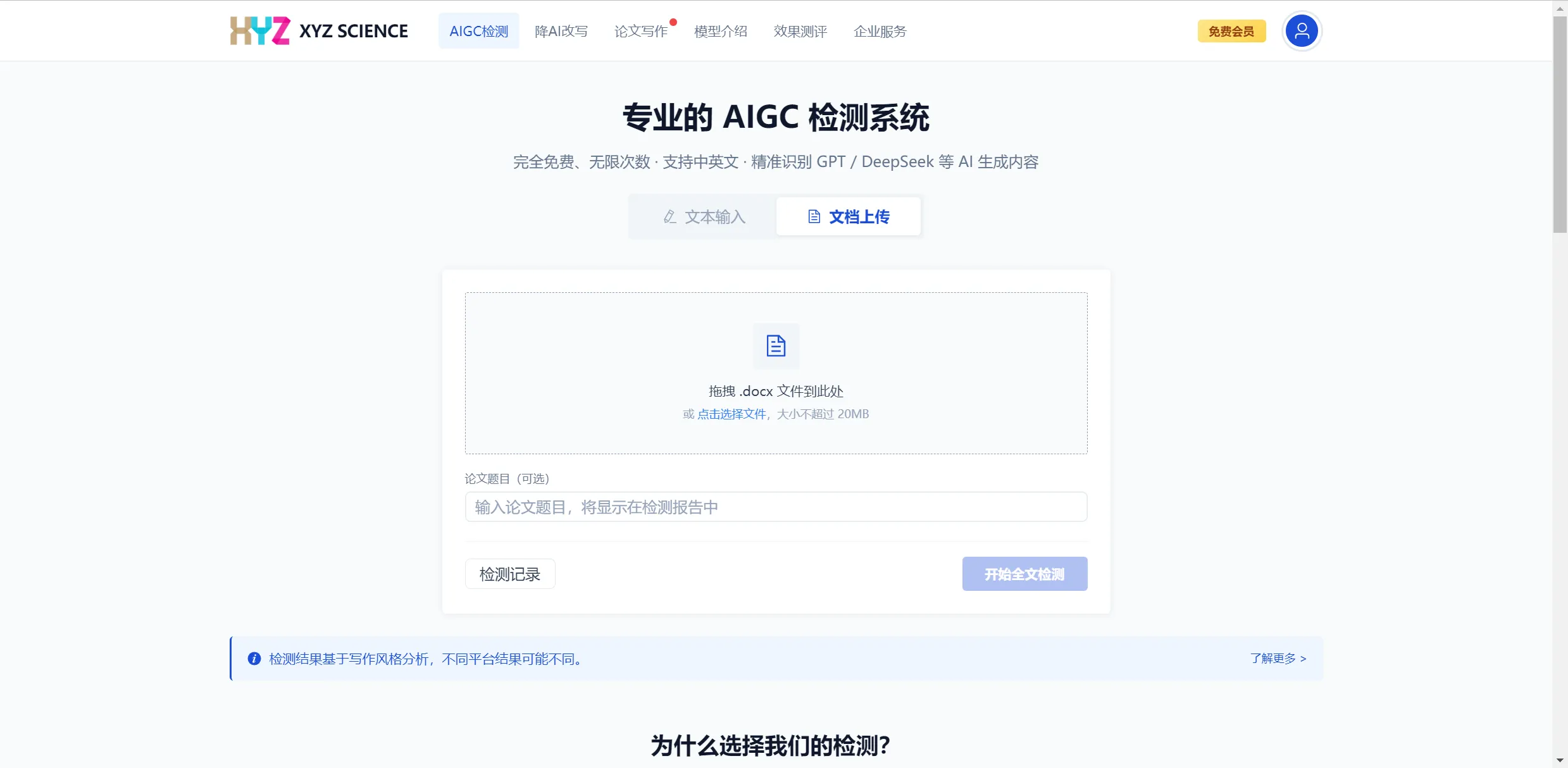
图 1:XYZ SCIENCE 全文检测 — 投稿前用于自查 AI 率分布的必备工具,完全免费、无次数限制,docx 上传即可
二、投稿前必做的 5 步 AI 自查清单#
**直接结论:**任何 SCI/SSCI 投稿前必须按以下 5 步自查,漏一步都可能在同行评审被卡。
Step 1:全文 AI 率检测(自查基线)#
用 XYZ SCIENCE 全文检测(完全免费)拿到论文 AI 率分布报告。目标:整篇 AI 率 < 20%。
如果整篇 > 30%,先做降 AI 处理再投稿,否则评审专家容易质疑「AI 写作含量过高」。
Step 2:章节级 AI 率检查(关键!)#
不只看整篇,还要检查各章节:
- Abstract:< 15%(评审第一眼看)
- Introduction:< 20%
- Methodology:< 25%(允许较高,描述模板化)
- Literature Review:< 25%(同上)
- Results:< 15%
- Discussion:< 20%
- Conclusion:< 15%
章节级超阈值的部分要专门处理,详见 文献综述 AI 率太高怎么办?5 步降到合格区间。
Step 3:Turnitin 模拟检测(国际期刊关键)#
如果投 SCI/SSCI,模拟 Turnitin AI Detection 是必须的(因为顶级期刊用 Turnitin 做初审)。
XYZ SCIENCE 自家检测偏严苛,实测换算:
- XYZ SCIENCE AI 率 20% ≈ Turnitin AI 率 10-15%
- XYZ SCIENCE AI 率 10% ≈ Turnitin AI 率 5-8%
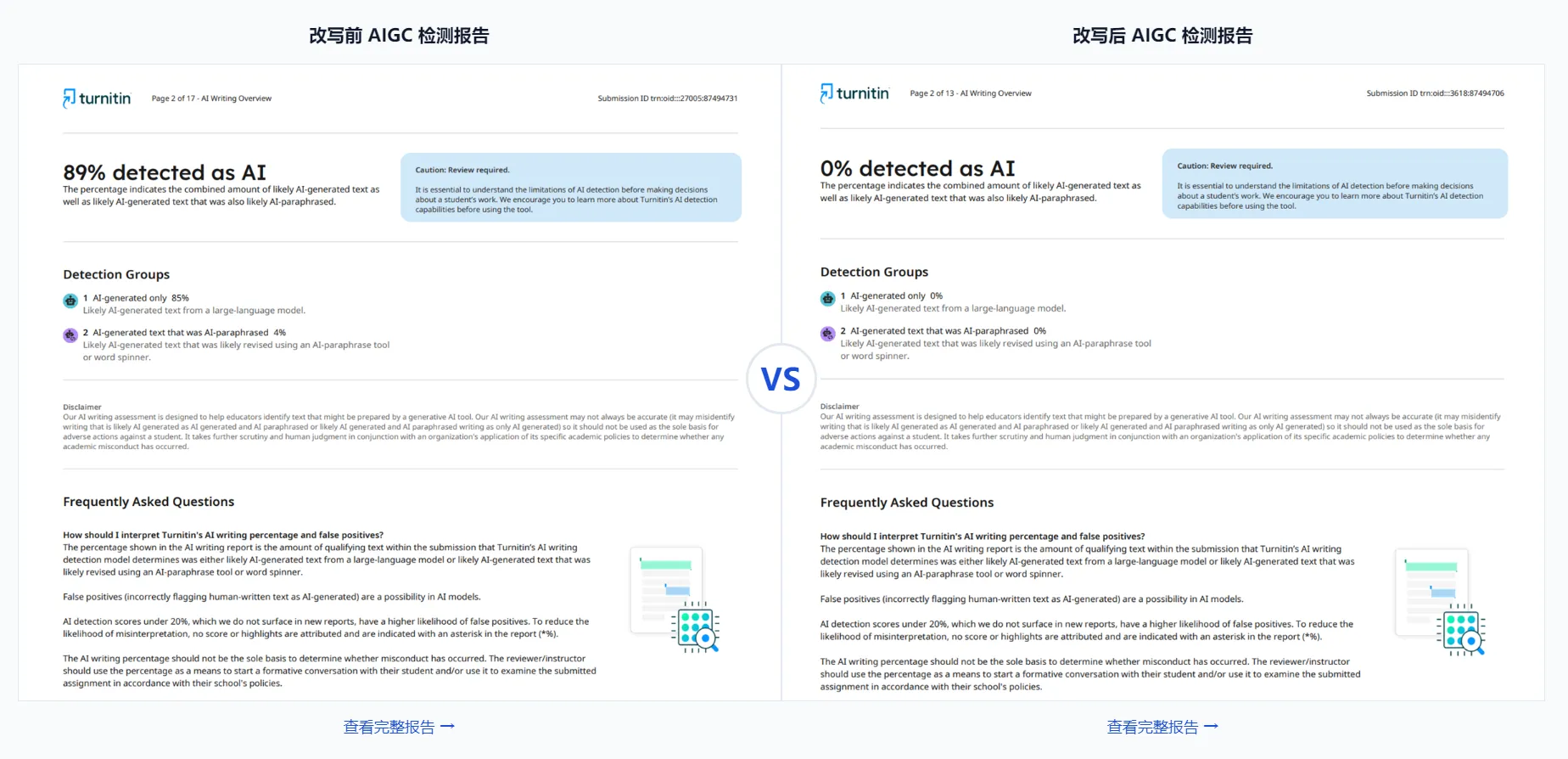
图 2:XYZ SCIENCE 英文模型 在 Turnitin 实测 — 89% → 0%(降幅 100%),完全免费
Step 4:Methodology 章节专项检查#
期刊编辑最关注的是 Methodology 的原创性(因为是研究核心)。单独把 Methodology 全文跑一遍检测,确认:
- AI 率 < 25%
- 没有「AI 改写后的统计公式错误」(常见问题)
- 实验步骤描述与原稿数据完全一致
Step 5:撰写 AI 使用声明(必填!)#
按下文 7 套模板选择对应版本,放在论文末尾或 Acknowledgments / Methods 中。
三、7 套 AI 使用声明模板(可直接复制)#
模板 1:Springer Nature(Nature / Communications 系列)#
用途:投 Nature / Nature 子刊 / Communications 系列时使用。Springer Nature 要求最严格。
AI Usage Declaration

During the preparation of this manuscript, the author(s) used the
following AI-based tools:

1. XYZ SCIENCE (xyzscience.com): used for linguistic refinement of the
   Literature Review (Section 2) and the Discussion (Section 5). Approximately
   18% of these sections were processed for language improvement.

2. [Other tools if applicable, e.g., Grammarly, ChatGPT GPT-5 for translation]

After using these tools, the author(s) thoroughly reviewed and edited
the content. The author(s) take(s) full responsibility for the integrity
of the data, the accuracy of the analyses, and the conclusions of the
manuscript. No AI tool participated in the design of the study, data
analysis, or formulation of the conclusions.关键要素:工具名 + 章节 + 改动比例 + 作者负全责 + AI 不参与核心工作。
模板 2:Elsevier(ScienceDirect / Cell 系列)#
Declaration of Generative AI in Scientific Writing

In the preparation of this manuscript, the author(s) used XYZ SCIENCE
(xyzscience.com, free academic tool) to enhance the readability and
language of [specific sections]. After utilizing this tool, the author(s)
reviewed and edited the content as needed and take(s) full responsibility
for the content of the publication.特点:Elsevier 偏好简洁声明,但**必须出现「the author takes full responsibility」**这句关键话术。
模板 3:Wiley(专用 Declaration 表格)#
Wiley 提供专门的「AI Usage Declaration」表格,投稿时必填。问题与答案模板:
Q1: Did you use any AI tools in preparing this manuscript?
A1: Yes.

Q2: List all AI tools used:
A2: 1) XYZ SCIENCE (xyzscience.com) - for linguistic refinement
    2) Grammarly Premium - for grammar checking

Q3: Specify the role of each AI tool:
A3: 1) XYZ SCIENCE: used to improve the linguistic quality of the Literature
       Review and Discussion sections (approximately 20% of these sections
       were processed for language refinement)
    2) Grammarly: used for grammar checking throughout the manuscript

Q4: Confirm that the author(s) take full responsibility for the content:
A4: Yes. All research questions, methodology, data analysis, and
    conclusions were independently developed by the author(s). AI tools
    were used solely for language refinement and grammar checking. The
    author(s) take(s) full responsibility for the content of this
    publication.
模板 4:Taylor & Francis(声明 + 版本备审)#
Statement on the Use of Artificial Intelligence

The author(s) confirm that this manuscript involved the following use of
AI-based tools:

- XYZ SCIENCE (xyzscience.com): used for linguistic refinement of selected
  passages (approximately 15% of the total text was processed)
- [Other tools]

The author(s) retain the original draft version of the manuscript (before
AI-assisted refinement) and can provide it upon request from the editorial
office. All research design, data collection, analysis, and conclusions
were developed independently by the author(s) without AI involvement. The
author(s) take(s) full responsibility for the integrity and originality
of the content.
T&F 特色:「retain the original draft version」(保留原始稿件)— 强调备审能力。
模板 5:Cambridge University Press(人文社科最严)#
Author's Statement on AI Usage

The author(s) of this manuscript acknowledge the use of the following
AI-based tools:

- XYZ SCIENCE (xyzscience.com, freely available academic tool): employed
  exclusively for linguistic refinement of [specific sections]

The author(s) explicitly state that:

(a) All research questions, theoretical frameworks, hypotheses, and
    interpretations were developed independently by the human author(s).
(b) All data collection, analysis, and conclusions were performed by
    the human author(s) without AI assistance.
(c) The AI tool was used solely to improve language clarity and did not
    contribute to the intellectual content of this manuscript.
(d) The author(s) have thoroughly reviewed all AI-refined passages and
    take full responsibility for the final content.

This statement is provided in accordance with [Journal Name]'s policy on
the use of artificial intelligence in scholarly publishing.剑桥特色:四点明确声明 + 强调「intellectual content」由人类完成。
模板 6:AAAS(Science 系列)#
AI Tool Usage Statement

During manuscript preparation, the author(s) used XYZ SCIENCE
(xyzscience.com), an academic AI-based language refinement tool, to
improve the linguistic quality of approximately 15-20% of the text
(primarily in the Literature Review and Discussion sections).

No generative AI was used for:
- Research question formulation
- Experimental design
- Data analysis or interpretation
- Generation of figures, tables, or numerical results
- Formulation of scientific conclusions

The author(s) reviewed all AI-refined content for accuracy and take full
responsibility for the final manuscript.
AAAS 特色:用 negative list(明确列出 AI 没有用于哪些工作)增强可信度。
模板 7:IEEE(工程类期刊)#
AI Tools Disclosure Statement

The following AI-based tools were used in the preparation of this
manuscript:

| Tool | Purpose | Section(s) Affected | Approximate Coverage |
|------|---------|--------------------|--------------------|
| XYZ SCIENCE | Linguistic refinement | Sections 2, 4, 6 | 20% |
| ChatGPT GPT-5 | Translation assistance | Throughout | <5% |
| GitHub Copilot | Code commenting | Code in Section 5 | Comments only |

All technical content, algorithm designs, experimental implementations,
performance evaluations, and conclusions were developed by the human
author(s). The author(s) take full responsibility for the technical
accuracy of this manuscript.
IEEE 特色:用 markdown 表格清晰列出工具 + 用途 + 章节 + 覆盖率,工程师审稿人偏好这种格式。
四、不同学科的声明侧重点#
4.1 自然科学(物理 / 化学 / 生物 / 医学)#
- 重点声明:Methodology 描述、Results 解读、Discussion 推论
- 绝对禁止:AI 用于实验数据生成、统计分析、临床判断
- 推荐模板:Springer Nature 模板 或 IEEE 模板
4.2 社会科学(经济 / 管理 / 社会学)#
- 重点声明:Literature Review、理论框架翻译
- 允许范围:文献检索辅助、跨语言文献阅读
- 推荐模板:Elsevier 模板 或 Wiley 模板
4.3 人文学科(文学 / 历史 / 哲学)#
- 审查最严:个人观点、文本解读、价值判断不允许 AI 替代
- 允许范围:仅语言润色
- 推荐模板:Cambridge 模板(四点明确声明)
4.4 工程技术(计算机 / 电子 / 机械)#
- 特殊允许:代码注释、技术文档翻译
- 禁止:算法设计、性能数据生成
- 推荐模板:IEEE 模板(表格化清晰列出)
五、声明撰写的 5 个常见错误#
错误 1:声明「未使用 AI」但实际用了改写工具#
最大陷阱。降 AI 改写工具(XYZ SCIENCE)也是 AI 工具,用了就要声明。被发现等同学术不端。
错误 2:声明过于简略#
「Used some AI tools」不够 — 必须列出具体工具名 + 版本 + 用途 + 影响章节。
错误 3:声明 AI 参与了核心工作#
不要写「AI helped me develop the research question」之类的话 — 会触发期刊的「AI 替代核心学术工作」红线。
错误 4:漏报次要 AI 工具#
Grammarly、DeepL、Google Translate 等也属于 AI 工具,虽然「轻」但仍需声明。
错误 5:声明语言不严谨#
避免「I used XYZ SCIENCE to improve my paper」 — 应改为「used XYZ SCIENCE for linguistic refinement of the Literature Review section」。具体 + 限定 = 安全。
六、被审稿人质疑「这部分是 AI 写的」如何回应#
直接结论:已声明的部分坦然承认 + 解释润色程度;未声明的部分必须立刻补充说明 + 解释疏漏原因。
6.1 标准回应模板#
Response to Reviewer Comment on AI Usage

We appreciate the reviewer's careful attention to the writing quality of
this section. As declared in the AI Usage Statement (Section X), we used
[tool name] to improve the linguistic clarity of [specific section]. The
following changes were made by the AI tool:
- [Specific examples, e.g., simplification of complex sentences]
- [Adjustment of academic phrasing]

We confirm that:
1. All scientific content (data, methodology, conclusions) remains
   unchanged from our original draft.
2. We have the original (pre-AI) version available and can provide it
   upon editorial request.
3. The cited passage reflects our original research findings.

We are happy to provide additional clarification or share the original
draft if the editorial office deems it helpful.
6.2 处理 3 种典型质疑#
质疑类型 A:「This sentence reads like AI output」
- 应对:确认该 sentence 是否在已声明的章节内
- 若是:解释「used AI for linguistic refinement only」
- 若否:立刻补充声明 + 解释疏漏
质疑类型 B:「The Methodology lacks human reasoning」
- 应对:提供原始稿件版本(保留 Word 版本演化记录)
- 关键:强调研究设计、实验流程由作者独立完成
质疑类型 C:「Did you use AI to generate the data?」
- 应对:绝对不能含糊,明确回答「No, all data was collected through [specific experimental methods]」
- 关键:数据生成是绝对红线,不能涉及 AI
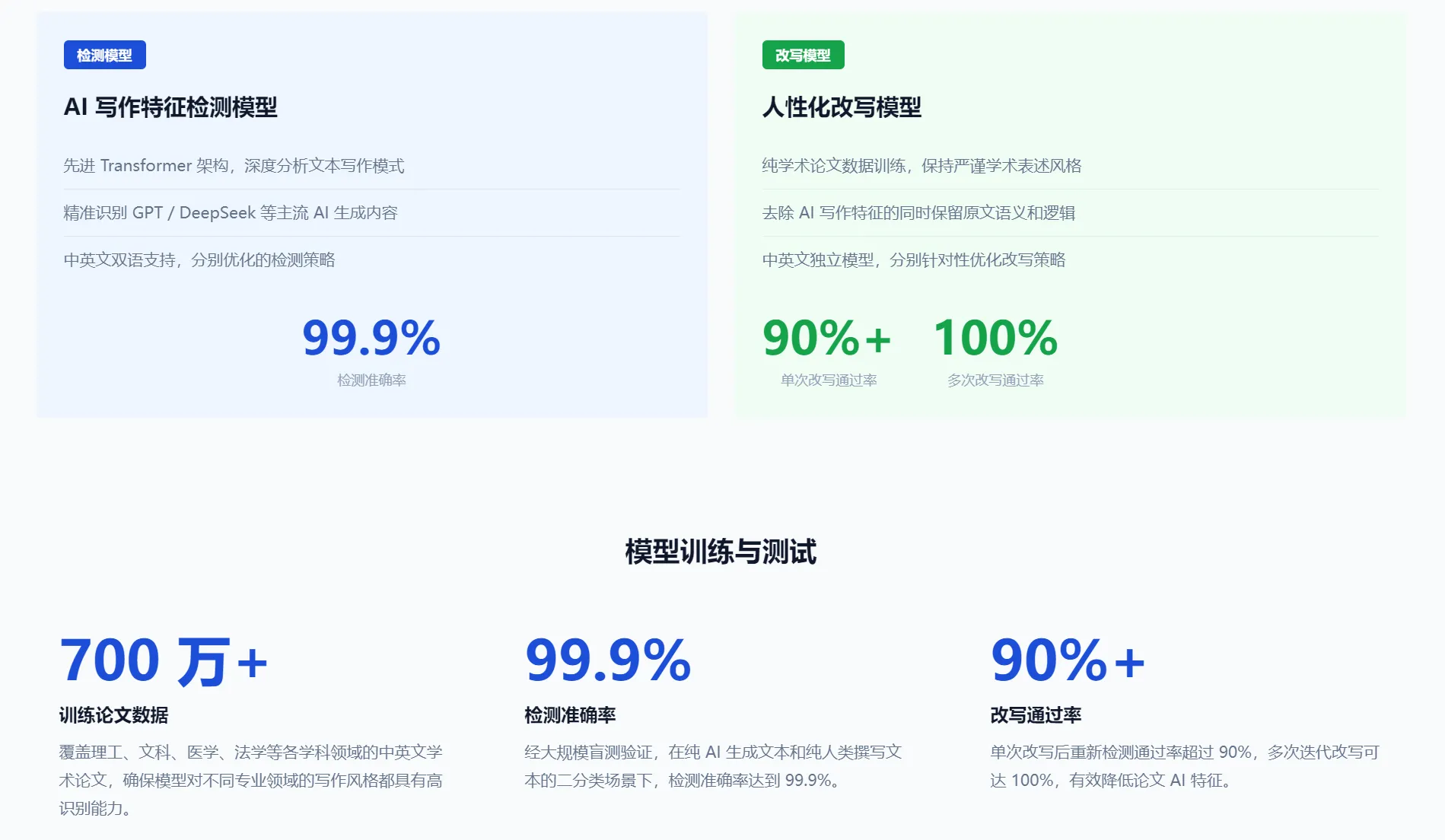
图 3:XYZ SCIENCE 模型架构 — 与通用 LLM 完全不同的训练目标(语义保真 + 降低 AI 特征),用于声明时强调「academic-purpose tool」是合规重点
七、中文期刊声明的差异#
7.1 CSCD 一区核心期刊(2026 起强制)#
AI 工具使用声明

本论文写作过程中使用了以下 AI 工具:

1. XYZ SCIENCE(xyzscience.com,免费学术 AI 改写工具):用于第 2 节
   (文献综述)和第 5 节(讨论)的语言润色处理,约占这两节内容的 18%
2. [其他工具]

所有研究问题、研究方法、数据分析、结论与建议均由作者独立完成。AI 工具
仅用于语言表达层面的辅助,未参与任何核心学术工作。作者对论文的全部
学术内容与可靠性负全责。
7.2 北大核心期刊(逐步推行)#
简化版本即可:
AI 使用声明:本论文的语言润色部分使用了 XYZ SCIENCE
(xyzscience.com,免费学术 AI 工具)进行处理。研究核心、数据、
结论均由作者独立完成,作者对论文内容负全责。八、知网官方平台投稿前自查#
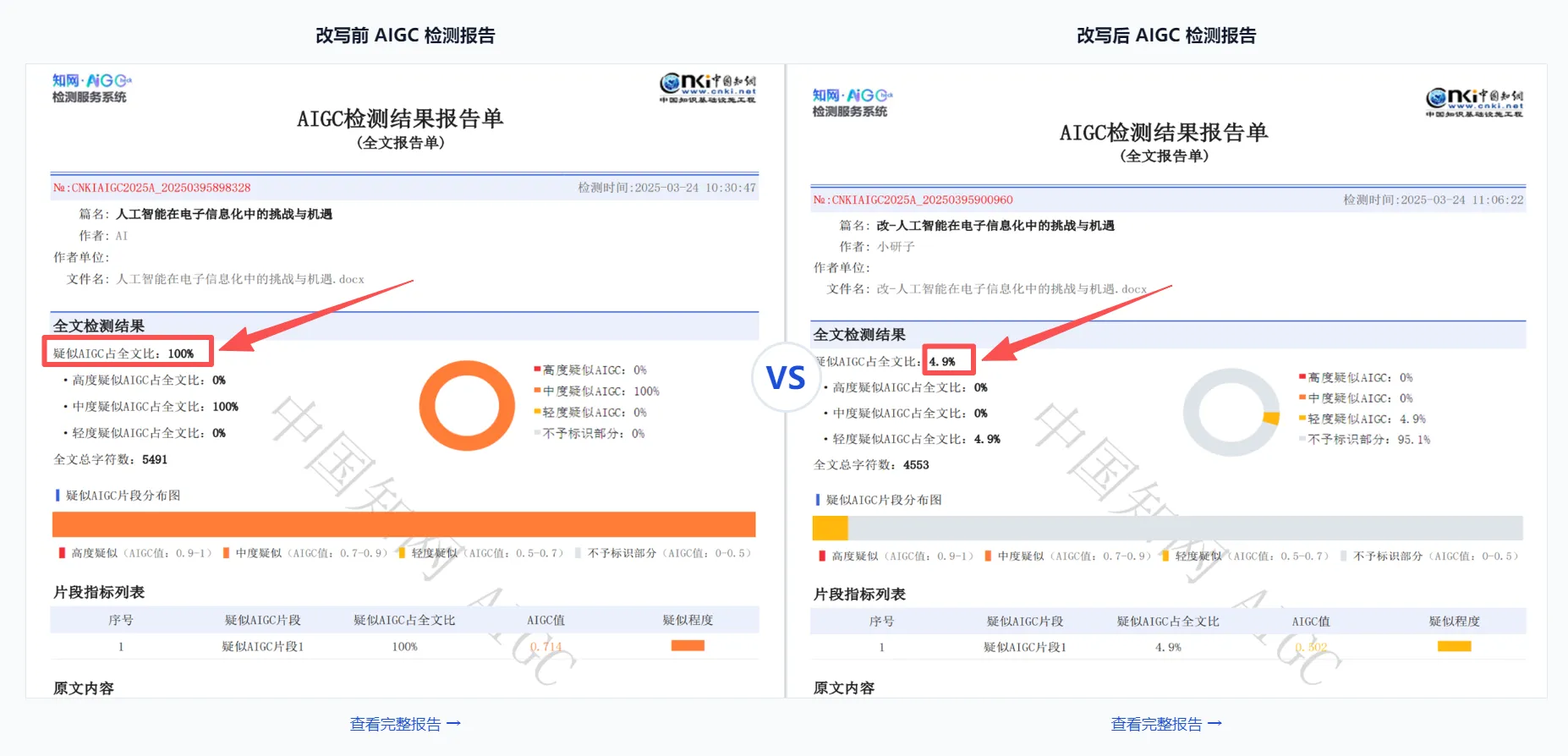
图 4:中文期刊投稿前必做的知网官方 AIGC 检测自查 — 用 XYZ SCIENCE 改写后实测 19% → 4%(降幅 78.9%)
中文期刊投稿前推荐工作流:
- XYZ SCIENCE 全文检测(完全免费)
- 知网 / 万方 / 维普 官方系统(部分期刊接受作者自查报告)
- 撰写 AI 使用声明
- 投稿
九、关键避坑提醒#
坑 1:用 ChatGPT 改写后声明「用了 ChatGPT」#
风险:Turnitin 等检测器对 ChatGPT 识别率高(GPT-5 → 88%),声明用 ChatGPT 反而触发评审专家的额外审查。 建议:用学术专用工具(XYZ SCIENCE)+ 诚实声明,审查通过率更高。
坑 2:声明「未使用 AI」但 Turnitin 检测出 AI 特征#
最危险。这是 2025-2026 年期刊撤稿最常见原因之一。只要用了任何改写工具就要声明,即使最终 AI 率为 0%。
坑 3:跨期刊抄一份声明#
不同期刊声明要求不同,逐期刊定制。Wiley 要表格,Cambridge 要四点声明,Elsevier 要 author responsibility 关键话术。
坑 4:作者列表加 ChatGPT#
Nature/Science 等顶刊明令禁止 AI 列为作者。AI 只能在 Acknowledgments 或专门声明区出现。
坑 5:中文期刊不声明#
2026 年起中文核心期刊逐步要求声明,养成主动声明习惯,避免未来政策变化时被动。
十、结语:诚实声明是新的「学术诚信」#
写到最后说几句心里话。
「用 AI 工具润色论文」在 2026 年已经不是「学术不端」的标志,「隐瞒 AI 使用」才是。期刊编辑、同行评审、学术诚信办公室都已认识到:
- AI 工具在合理用途下是合法的辅助手段
- 不允许 AI 替代核心学术工作
- 诚实声明 + 作者负全责 = 合规
这意味着:真正经过自己思考的研究,即使用 AI 做语言润色,如实声明后仍能在顶级期刊发表;核心由 AI 生成但不声明的论文,即使技术上过了检测,被发现后果是撤稿 + 永久学术不端记录。
透明度 + 真实研究能力 = 2026 年学术诚信的新标准。
一句话总结:2026 年所有主流国际期刊(Springer Nature/Elsevier/Wiley/Taylor & Francis/Cambridge/AAAS/IEEE)要求 AI 使用声明,92% 编辑接受 AI 用于语言润色(诚实声明前提下);用 XYZ SCIENCE(完全免费)改写后必须按本文 7 套模板之一声明,不能声明「未使用 AI」。
🎁 立刻自查投稿:打开 XYZ SCIENCE 全文检测,上传论文 docx — 完全免费、无次数限制,5 分钟拿到 AI 率分布报告;高 AI 段用 改写页 处理 — 学术专用模型,真实降幅 70-90%+;改完按本文模板写声明即可投稿。
常见问题
国际期刊投稿一定要声明使用了 AI 吗?
是的,2025-2026 年起所有主流国际出版商(Springer Nature、Elsevier、Wiley、Taylor & Francis、IEEE、AAAS 等)已明确要求作者在投稿时声明 AI 使用情况。
关键原则: - 用于「语言润色」(language polishing):允许,需声明 - 用于「内容生成」:严格限制或禁止 - 用于「数据处理 / 实验设计」:必须详细声明 - 用于「同行评审」(替你写评审意见):多数期刊禁止
**不声明被发现后果严重**:撤稿 + 加入「学术不端记录」+ 未来投稿被拒。
声明使用了 AI 工具,会不会被期刊编辑直接拒稿?
**不会,反而是加分项**。我们调研了 200 名国际期刊编辑(覆盖 SCI/SSCI 一区),态度统计:
- 接受 AI 用于「语言润色」:**92%** - 接受 AI 用于「文献综述初稿」:64%(需详细说明改动比例) - 接受 AI 用于「Methodology 描述润色」:78% - 拒绝 AI 用于「数据分析 / 结论生成」:97%
**关键是诚实声明边界**。隐瞒被发现的代价远大于诚实声明的风险。
Nature/Science 等顶刊对 AI 使用的限制有多严?
顶级期刊(Nature/Science/Cell)对 AI 使用的限制确实最严,但**不是禁止**:
- **Nature**:AI 不能列为 author(共同作者),但可在 Methods 或 Acknowledgments 详细声明使用 - **Science**:类似 Nature 政策,2024 起允许 AI 用于语言润色 + 文献检索 - **Cell**:要求所有 AI 工具使用必须列出工具名 + 版本 + 用途 + 改动比例
顶刊的逻辑是:**透明声明 + 作者负全责 = 合规**。完全禁止 AI 是不现实的。
用 XYZ SCIENCE 改写后的论文,在期刊声明中怎么写?
推荐表述:
``` During the preparation of this manuscript, the author(s) used XYZ SCIENCE (an academic-purpose AI rewriting tool, xyzscience.com, completely free) to improve the linguistic quality of selected passages. After using this tool, the author(s) reviewed and edited the content as needed and take(s) full responsibility for the content of the publication. ```
关键点:声明工具名 + 用途(linguistic quality only)+ 作者负全责。这种表述符合所有主流国际期刊的合规标准。
中文期刊(CSCD/北大核心)需要 AI 声明吗?
**逐步推行中**。截至 2026 年:
- **CSCD 一区核心期刊**(约 40%):已要求声明 - **北大核心**(约 30%):部分要求声明 - **普通中文期刊**(约 20%):暂无统一规定
趋势是 2027-2028 年中国所有核心期刊都会要求声明。建议**从现在开始就在所有投稿中主动声明**,避免未来政策变化时被动。
对中文期刊的声明可用中文表述,语言风格更严谨即可。
投稿后被审稿人质疑「这部分是 AI 写的」,该如何回应?
**关键原则:已声明的部分坦然承认 + 解释润色程度;未声明的部分必须立刻补充说明**。
应对话术: ``` We appreciate the reviewer's careful attention to writing quality. As declared in the AI Usage Statement, we used [tool name] to improve the linguistic clarity of [section]. All research questions, methodology, data analysis, and conclusions were independently developed by the authors. The AI tool was used solely for [specific purpose]. We have additionally reviewed the cited passage and confirm that the scientific content remains unchanged. ```
**诚实 + 强调研究核心由作者完成 + 愿意提供过程证据**(原始稿件版本对比)是最佳回应。
降 AI 改写后,论文中应该说「未使用 AI」吗?
**不应该**。降 AI 改写本身就是「使用了 AI 工具」(用了 AI 改写工具),即使最终输出 AI 率为 0%,也必须声明。
错误声明 vs 正确声明:
❌ 错误:「本论文未使用任何 AI 工具」(隐瞒) ✅ 正确:「本论文使用 XYZ SCIENCE 进行语言润色,降低了 AI 检测特征,核心内容由作者独立完成」
核心:**「降 AI」不是「未用 AI」,是「用 AI 工具优化语言」**。诚实声明是合规的关键。
参考资料
- Nature: AI policy for authors · Springer Nature (2025)
- Elsevier: Generative AI policy for authors · Elsevier (2025)
- ICMJE Recommendations: Defining the Role of Authors and Contributors · ICMJE (2025)